
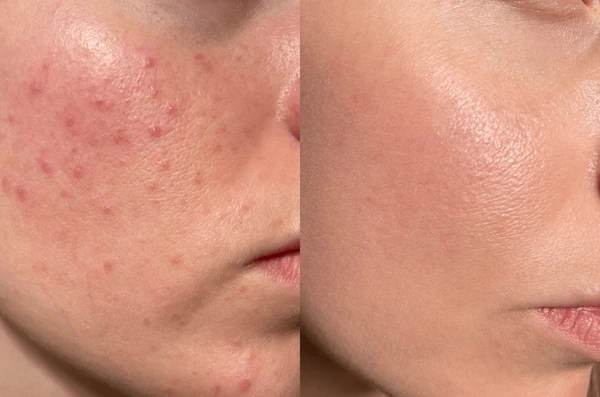

What Causes Acne?
1. Excess Sebum (Oil) Production
Sebum helps protect the skin, but excessive oil can clog pores and trigger acne.
Common triggers include:
- Puberty
- Hormonal fluctuations
- Stress
- Genetic predisposition
👉 Key point: Oily skin does not always mean healthy skin.
2. Clogged Pores (Dead Skin + Oil)
When dead skin cells don’t shed properly, they mix with oil and block pores.
This leads to whiteheads and blackheads, which can later become inflamed.
Contributing factors:
- Over-cleansing
- Insufficient or excessive exfoliation
- Heavy or comedogenic skincare products
3. Bacterial Overgrowth
Blocked pores create a low-oxygen environment where acne-causing bacteria thrive.
This can result in inflamed acne such as red bumps, pustules, and cysts.
4. Hormonal Changes
Hormones are a major driver of adult acne.
- Often appears on the chin, jawline, and around the mouth
- Linked to menstrual cycles, pregnancy, and chronic stress
- Frequently resistant to skincare alone
👉 Typical sign: Acne that flares predictably and repeatedly.
5. Lifestyle Factors
Your skin reflects your internal health.
Common contributors:
- Poor sleep
- High-sugar or high-glycemic diets
- Excess dairy intake
- Chronic stress
Acne Solutions That Actually Work
1. Mild Acne – OTC Products
1) Salicylic Acid (BHA) — unclogs pores
- Helps shed dead skin cells and prevent buildup.
- Good for blackheads/whiteheads.
Common OTC options:
- CeraVe Renewing SA Cleanser
- Paula’s Choice Skin Perfecting 2% BHA Liquid
- The Ordinary Salicylic Acid 2% Solution
- Neutrogena Oil-Free Acne Wash
2) Benzoyl Peroxide — bacterial control
- Reduces acne-causing bacteria and inflammation.
- Good for inflamed spots.
Common OTC options:
- PanOxyl 4% or 10% Acne Foaming Wash
- La Roche-Posay Effaclar Duo (+ BPO version)
- CeraVe Acne Control Gel (with 4% BPO)
- Clean & Clear Persa-Gel 1
3) Adapalene (OTC retinoid)
- Prevents clogged pores (comedolytic)
- Improves texture and prevents new acne
- Good for early breakouts + long-term acne control
🔹 Products
- Differin Gel 0.1%
- La Roche-Posay Effaclar Adapalene Gel
- AcnEase Adapalene Gel
How it works: cell turnover → fewer plugs
4) Niacinamide
- Anti-inflammatory
- Regulates oil production
- Improves redness and barrier function
🔹 Products
- The Ordinary Niacinamide 10% + Zinc 1%
- Paula’s Choice 10% Niacinamide Booster
- CeraVe PM Facial Moisturizing Lotion (with niacinamide)
How it works: calming + barrier support
2. Moderate Acne – Prescription Medications
1. Topical Retinoids (Foundation)
Role: prevent new acne
Use: long-term
- Tretinoin
- Adapalene (prescription strength)
- Tazarotene (strongest)
Key points
- Core medication for moderate acne
- Works slowly but determines long-term control
- Acne usually returns if stopped
- Tretinoin has some permanent effect by making skin easier to stay unclogged
2. Topical Antibiotic + Benzoyl Peroxide (Inflammation Control)
Role: reduce inflammatory lesions
Use: short-term only
- Clindamycin + benzoyl peroxide
- Erythromycin + benzoyl peroxide
Key points
- Never used alone (resistance risk)
- Used to calm active breakouts
- Discontinued after a few months
3. Oral Antibiotics (Temporary Escalation)
Role: systemic inflammation control
Use: limited duration
- Doxycycline
- Minocycline
- Sarecycline
Key points
- Typically 2–4 months
- Not a long-term solution
- Retinoid should be continued
- Acne often relapses after stopping
4. Hormonal Therapy (Patterned Adult Acne)
Role: reduce androgen-driven acne
Use: ongoing while effective
- Spironolactone
- Combined oral contraceptives
Key points
- Most useful for chin/jawline acne
- Controls acne while taken
- No permanent effect after stopping
3. Severe Acne – Isotretinoin (Accutane): Benefits, Dosing, and Pregnancy Safety
Isotretinoin is considered the most effective treatment for severe or persistent acne.
Unlike other acne medications, it can lead to long-term remission after a finite course of treatment.
Why Isotretinoin Is Different (Benefits)
1. Long-term acne remission
Most acne treatments work only while you are using them.
Isotretinoin is different because many patients remain clear months or years after stopping.
Relapse can happen, but:
- it is less common
- and usually less severe
This is why isotretinoin is often described as having a “permanent” effect.
2. Significant reduction in oil production
Isotretinoin shrinks sebaceous (oil) glands and reduces oil output.
- Less oil → fewer clogged pores
- Less inflammation → fewer cysts and nodules
Oil production may partially return, but acne tendency is often permanently reduced.
3. Short, defined treatment course
- Typical course: 4–8 months
- Not a lifelong medication
- Goal is to finish treatment, not stay on it
For many patients, this makes isotretinoin preferable to years of antibiotics or topical cycling.
How Isotretinoin Is Dosed
Isotretinoin dosing is weight-based and focused on total exposure over time.
Typical dosing strategy
- Starting dose: 0.3–0.5 mg/kg/day
- Target dose: 0.5–1.0 mg/kg/day, if tolerated
- Total cumulative dose matters more than daily dose
Why cumulative dose matters
Higher cumulative exposure is associated with:
- lower relapse rates
- longer remission
This is why some patients stay on a moderate dose longer instead of rushing to a high dose.
Dose adjustments
Dose may be lowered if:
- dryness is severe
- labs change
- joint or muscle pain becomes limiting
Dose is individualized — not everyone needs the maximum dose.
Pregnancy Risk: The Most Critical Rule
Isotretinoin is highly teratogenic.
Exposure during pregnancy can cause:
- severe birth defects
- miscarriage
Because of this, isotretinoin has the strictest pregnancy prevention requirements of any acne medication.
iPLEDGE Program (United States)
In the U.S., isotretinoin is regulated through iPLEDGE, a mandatory safety program.
Key iPLEDGE requirements
For patients who can become pregnant:
- Two negative pregnancy tests before starting
- Monthly pregnancy tests during treatment
- Continued pregnancy testing after stopping
- Use of two forms of contraception (or strict abstinence)
- Monthly confirmation in the iPLEDGE system
For patients who cannot become pregnant:
- Enrollment and monthly confirmations are still required
- No pregnancy testing needed
Medication cannot be dispensed unless all requirements are met each month.
After Stopping Isotretinoin
- Pregnancy must be avoided for at least 1 month after the last dose
- Most side effects (dry lips, dry skin) resolve gradually
- Maintenance therapy, if needed, is usually mild (topical retinoid)
What “Permanent Effect” Really Means
Isotretinoin does not permanently shut off oil glands.
What it often does:
- lowers baseline oil production
- reduces acne severity long-term
- breaks the cycle of constant relapse
In other words:
- most acne meds control
- isotretinoin modifies the disease
Bottom Line
Isotretinoin is chosen because it offers:
- the highest chance of long-term acne control
- a finite treatment timeline
- relief from years of recurring acne
Its benefits come with strict pregnancy rules and careful dosing, but for severe acne, it remains the most definitive option available.
Acne Severity and Products
| Severity | Medications | Where to Get | Effects |
| Mild | Salicylic Acid Benzoyl Peroxide Adapalene | Over the Counter | Temporary |
| Moderate | Tretinoin Cream Oral Antibiotics | Prescription | Tretinoin has Semi-Permanent effects |
| Severe | Isotretinoin (Accutane®) | Prescription | Permanent effects exist |
Online Isotretinoin Providers (Telehealth)
| Service | What It Is | Isotretinoin Prescriptions | Pros | Cons |
|---|---|---|---|---|
| Clear Health | Online dermatology platform | Yes (Accutane / generic) | Very simple process; good communication; high user satisfaction | Lab work still needed locally; reviews mixed on convenience |
| Honeydew | Fully online skincare & prescription service | Yes (Accutane / generic) | 100% online care; prescription + support; insurance accepted | Costs may vary depending on insurance |
| Miiskin Online Dermatologist | Teledermatology evaluated by licensed derm for prescription | Yes | Lower consultation fee (~$59/mo) and structured acne plan | You may need photos + labs + monthly check-ins |
| DirectDerm | Online dermatology visit with board-certified MD | Possible | Diagnosis & prescription within 24–48 hrs | Not acne/Accutane specific — depends on provider |
| Doctor On Demand | Telemedicine doctors for various conditions | Possible | General online visit with prescription options | Not specialized dermatology; may not offer full acne management plan |